

How to Plan a Montessori Birthday Party Celebration
Planning your child’s birthday celebration is a fun, yet somewhat stressful event for many parents. The myriad of decisions — from choosing a theme to selecting the venue, deciding on the menu, and curating engaging activities — can sometimes leave you feeling creatively tapped out.
If you’re in search of an avenue that not only keeps the little ones captivated and entertained but also seamlessly weaves in a dose of enriching learning, a Montessori-themed party for your children’s birthdays might just be the perfect choice.
What is a Montessori Birthday Celebration?
Rooted in the principles of child-centered learning, hands-on exploration, and self-directed activities that align with the Montessori philosophy, a Montessori birthday celebration offers a wholesome and unique way to celebrate your child’s special day with their friends and family members.
By embracing the Montessori philosophy, you not only create a memorable special event but also provide an environment that nurtures your child’s curiosity, fosters independence, and encourages interactions in a meaningful way.

Example of What a Montessori Birthday Party Might Look Like:
Age:
Montessori principles can be applied to a variety of age groups, but Montessori birthday parties are often most suitable for young children in the preschool and early elementary school age range. Here are some general age guidelines:
- Preschoolers (Ages 3-6): Montessori birthday parties can be particularly effective for preschool-aged children. At this stage, they are naturally curious, enjoy hands-on activities, and benefit from a child-centered learning approach. Activities should be age-appropriate and align with Montessori principles of exploration and independence.
- Early Elementary (Ages 6-9): Montessori principles can continue to be applied effectively for children in the early elementary years. The mixed-age aspect of Montessori education works well in this age range, allowing older children to interact with younger ones, in a special way, by mentoring them.
Party Structure:
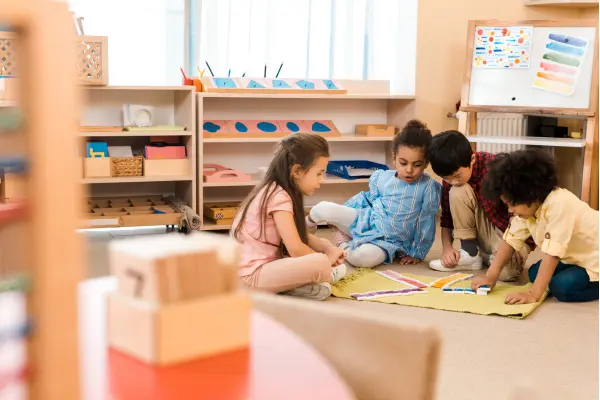
Great environments for a Montessori party include a spacious backyard, a community center, or a Montessori school facility. A Montessori birthday party would likely have an open structure, allowing children to choose activities based on their interests. The focus would be on the child’s autonomy and self-directed exploration with birthday party attendees moving through the stations as they are drawn. The setting should be organized with inviting and age-appropriate materials, reflecting the Montessori way of creating a stimulating yet orderly space.

Activities:
Here’s a lineup of activities guaranteed to create special moments for the birthday boy or girl and their guests.
- Nature Exploration: Begin with a nature exploration activity. Set up a nature table with items like leaves, pinecones, or rocks for children to observe and discuss. This aligns with Montessori’s emphasis on connecting with the natural world.
- Art and Craft Station: Create an art station with a variety of materials where children can engage in creative expression. This hands-on activity promotes fine motor skills and allows children to explore their artistic inclinations.
- Practical Life Skills: Incorporate a practical life skills activity, such as a cooking station where children can participate in making a simple, small treat or healthy snack. This aligns with the Montessori focus on developing practical life skills and independence. Another idea would be, for the birthday cake, consider a “decorate your own cupcake” station.
- Collaborative Games: Choose collaborative games that promote teamwork and social interaction. Activities like building a group structure or solving a puzzle together encourage cooperation and use of social skills.
- Storytelling Corner: Design a cozy storytelling corner with cushions and books. Encourage children to share their favorite stories or create imaginative tales. This aligns with Montessori’s emphasis on language development and creativity.
- Sensorial Exploration: Set up a sensorial exploration area with materials that engage the senses, such as a texture table or a sound exploration station. This aligns with the Montessori approach to developing sensory awareness.
- Music and Movement: Integrate music and movement activities. Children can explore rhythm, dance, or engage in a mini concert with simple instruments. This aligns with Montessori’s recognition of the importance of movement in learning.
Favor Bags with Purpose:
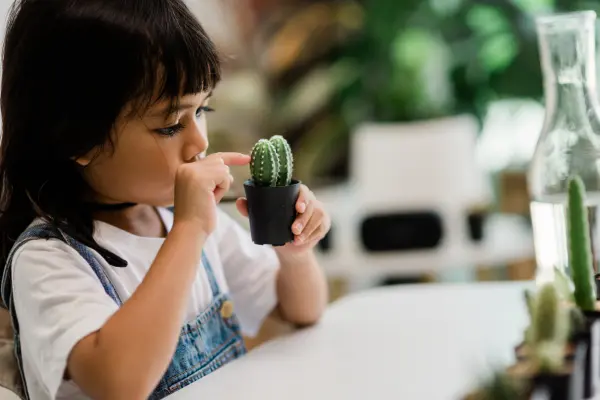
Instead of traditional favor bags, consider gifting each child a small plant or seed kit. It’s a symbolic reminder of growth and nurturing, aligning with Montessori principles.
Montessori-Themed Gift Ideas:
Montessori-inspired gifts focus on promoting independence, exploration, and hands-on learning for the birthday child. Here are some ideas categorized by age:
Toddlers (1-3 years):
- Shape Sorters: Wooden or fabric shape sorters to develop fine motor skills and shape recognition.
- Nesting and Stacking Toys: Sets of nesting cups or stacking blocks for exploring size relationships.
- Montessori Puzzles: Simple puzzles with large pieces and knobs for easy manipulation.
Preschoolers (3-6 years):
- Nature Exploration Kit: Binoculars, magnifying glass, and a guidebook for outdoor exploration.
- Montessori Sandpaper Letters and Numbers: Tactile letters and numbers for early literacy and numeracy learning.
- Practical Life Materials: Child-sized tools for practical life activities, like pouring, scooping, and cleaning.
Early Elementary (6-9 years):
- Botany Puzzle: A puzzle set that introduces botanical concepts and plant anatomy.
- Math Beads and Counting Boards: Hands-on materials for learning mathematical concepts.
- Child-Friendly Microscope: A simple microscope for observing small objects and fostering a love for science.
Late Elementary (9-12 years):
- Geography Materials: Montessori-inspired maps, globes, and geography games for learning about the world.
- Musical Instruments: Child-sized musical instruments to explore rhythm and melody.
- Craft and DIY Kits: Kits that encourage creativity and hands-on crafting, such as sewing or woodworking kits.
Remember to consider the child’s individual interests and developmental stage when selecting a gift. Montessori-inspired gifts often prioritize open-ended materials that allow for creativity and independent exploration.
Additionally, natural materials, simplicity, and a focus on the child’s active engagement with the learning process are key characteristics of Montessori-themed gift exchanges.

Where Did This Idea Come From?
Montessori refers to an educational approach developed by Dr. Maria Montessori, an Italian physician and educator, in the early 20th century. The Montessori method is based on the philosophy that children are naturally curious, self-directed learners, and a learning environment should support the child’s development development.
Key Principles of the Montessori Method Include:
- Child-Centered Learning: The focus is on the child’s natural desire to learn and explore. The teacher, often referred to as a guide, observes and facilitates the Montessori students’ learning rather than dictating the content.
- Prepared Environment: Classrooms are carefully designed to provide a supportive and stimulating environment. Materials are arranged in an orderly way, and each item has a specific educational purpose. The idea is to encourage independence and exploration.
- Mixed-Age Classrooms: Children of different ages share the same learning environment. This promotes collaboration, peer learning, and a sense of community. Older children can act as mentors to younger ones.
- Self-Directed Learning: Children are encouraged to choose activities based on their interests and curiosity. The goal is to foster a love for learning and allow each child to progress at their own pace.
- Hands-On Learning: The Montessori method places a strong emphasis on hands-on, experiential learning. Learning materials are designed to be manipulative and self-correcting, allowing children to discover concepts through direct experience.
- Respect for Individual Development: Montessori education recognizes and respects the individual differences in children’s development. The approach aims to nurture the physical, social, emotional, and cognitive aspects of each child.
- Uninterrupted Work Periods: Montessori classrooms often have extended, uninterrupted work periods. This allows children to engage deeply in activities and helps them develop concentration and focus.
- Freedom within Limits: While children have the freedom to choose their activities, there are guidelines and limits to ensure a respectful and orderly environment. This helps children develop self-discipline and responsibility.
Montessori education is widely used in preschool and elementary settings but can extend to older age groups as well. The method has gained popularity globally for its holistic approach to education, emphasizing the development of the whole child.
How Birthdays are Celebrated in Montessori Classrooms:
Montessori schools worldwide embrace a unique Montessori birthday tradition to honor a child’s special day. This special activity, the Montessori birthday walk, serves as a meaningful avenue for enhancing their comprehension of the passage of time. It proves to be an excellent introduction to fundamental concepts such as months of the year, days of the month, the earth, the sun, and the earth’s orbit around the sun.
The purpose of this birthday ritual is twofold: first, to assist students in acknowledging the growth and changes they’ve undergone since birth, and second, to help them grasp the significance of turning a year older.
During the Montessori birthday celebration, students sit gathered in a large circle, with the birthday child seated beside the teacher. A candle, or another symbol of the sun, is placed in the middle of the circle, often surrounded by the months of the year. The birthday student holds a globe while the teacher lights the candle and shares with the children the concept that the earth orbits around the sun, completing one rotation in a year. Essentially, the child’s walk symbolizes the earth’s journey around the sun, signifying the completion of another year.
As the child walks one time around the “sun”, the whole class sings ‘The Earth Goes Round The Sun’ to the tune of the Farmer in the Dell. When the student has made it around the circle once it signifies they are one year old and a picture from the child’s first year is shared. This is continued with one lap for every year with corresponding photos of the child for each year of life. When you get to the current age of the child, everyone sings the happy birthday song which makes for a truly treasured birthday tradition!
Whether it’s a birthday bash or just everyday play, Montessori principles are easy to incorporate into your child’s world. What are your thoughts? Leave them in the comments!


