
Skin Checks, Eczema & Sunscreen: A Dermatologist Answers Your Questions
When it comes to our skin, there are a lot of questions that come up as parents…from figuring out what to do about a child’s eczema to wondering when we should start getting regular skin checks ourselves.
As part of my partnership with Reedsburg Area Medical Center, I connected with dermatologist Sarah Motl, PA to get answers to some of the questions from moms inside Sauk County Mom Community.
Dermatology Questions from Local Parents
Eczema Patches
One mom asked about little eczema patches appearing all over her child. I asked Sarah what should parents know about treating mild eczema at home, what products or ingredients should parents look for (and which ones should they avoid), and when should eczema be evaluated by a dermatologist?
Sarah said, “Here is the bathing and moisturizing instructions I give to my patients. Following these closely helps support the skin barrier to minimize eczema/rash flares.” ⬇
Proper Bathing and Moisturizing Tips
“The Three Minute Rule”
- Bathe daily (in lukewarm water for 10-15 minutes)
- Use Dove unscented, Cetaphil, CeraVe, Vanicream, La Roche-Posay or Aveeno gentle cleansers
- Pat dry, but you can still be damp
- Apply medicated ointment or emollient cream within 3 minutes of bathing.
- Emollients that are good for sensitive skin include Vaseline petroleum jelly, Vanicream cream, Aveeno cream, Cetaphil cream, CeraVe cream and La Roche-Posay Lipikar Triple Repair cream
- Use a cream, NOT a lotion, as creams are more hydrating
For flares, they can start with OTC hydrocortisone cream 2 times a day to rash for up to 1 week on the face and 2 weeks elsewhere on the body.
Education that eczema is often recurrent — there is unfortunately no cure, but there are “tools” to control it as listed above.
If the eczema is not controlled with the above, I would recommend they see their primary for prescription topical steroids and not steroid creams. If the eczema is not controlled with the prescriptions from their primary, then they should see Dermatology.
When Should I Have My First Skin Check With a Dermatologist?
Skin checks often are based on personal and family history. If there is an immediate family history of melanoma, then skin checks should start sooner.
It is also dependent on sun exposure history (ex: a lot of sunburns, fair complected, etc…) or if the patient has a lot of moles. If there is a significant sun exposure history and a lot of moles, then skin checks can be started earlier in life.
Melanoma and non-melanoma skin cancers are very rare in children, so we often recommend they get checked if they have a specific lesion that looks different than the rest of their moles or a rapidly changing or symptomatic lesion (bleeding, crusting, not healing for more than 6 weeks are a couple examples).
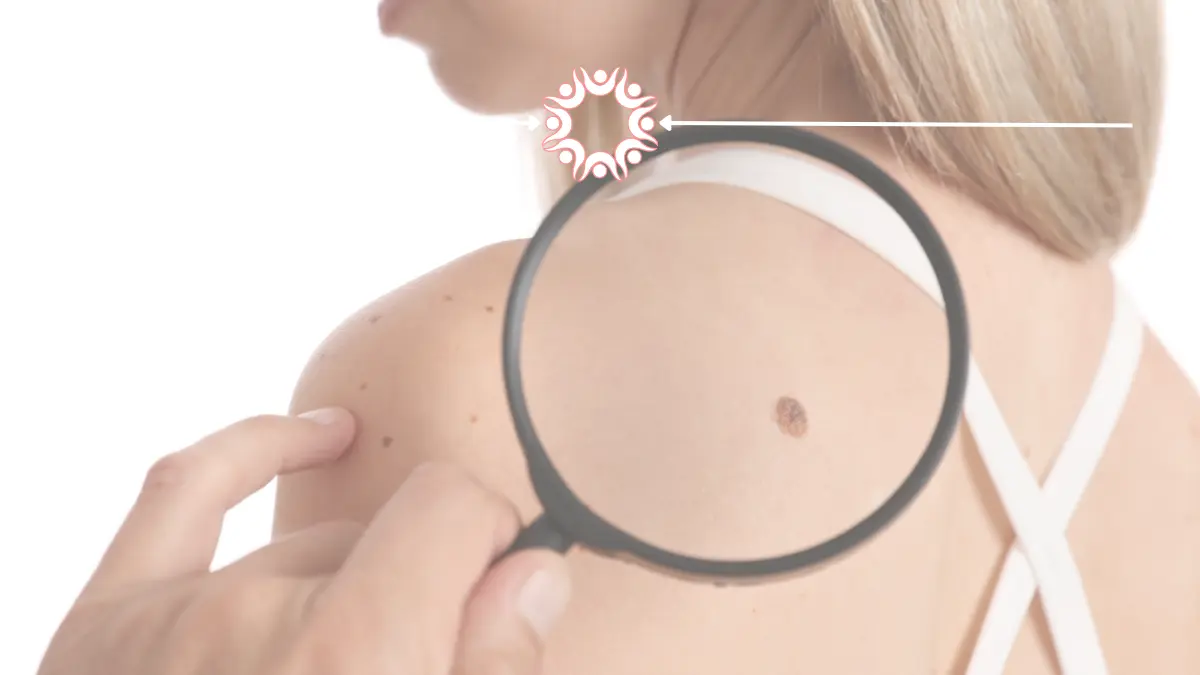
What Should We Actually Be Looking for When We’re Doing a Skin Check at Home? How Can I Tell If a Mole or Spot Might Be Concerning?
Self Skin Checks
- Perform skin self-exams regularly to become familiar with existing growths and to notice any changes or new growths.
- You might consider taking photos of any moles you have on your cell phone for monitoring.
- Contact us with rapidly growing lesions or 6 weeks of tender, spontaneously bleeding, non-healing lesions.
- Look for the ABCDEs of atypical nevi and melanoma and call us should you notice any.
- A: Asymmetry — cutting it into 4 equal parts, no 2 parts look the same.
- B: Borders — shape is not nice and round or oval but has what look like little extensions, or “arms” and “legs,” coming off of it.
- C: Color — 3+ more colors, red, blue/black, losing color.
- D: Diameter — larger than a pencil eraser in combination with one of the other ABCDEs.
- E: Evolving — or changing to develop the above features.
What Makes Someone Higher Risk for Skin Cancer?
Risk factors for skin cancer include:
- History of blistering sunburns
- Tanning bed use
- Family history
- Having more than 50 moles
- Immunosuppression
We’re Past Summer, But Should Sunscreen Still Be Part of Our Everyday Routine?
Yes — daily sunscreen on the face is encouraged year round. This regular exposure can increase the risk of skin cancer but also premature aging (sun spots/wrinkles).
Sunscreen tips:
- We recommend using sunscreen every day, even in the winter or on cloudy days.
- A broad-brimmed hat and sun-protected clothing will also help with added sun protection.
- If you are going to be outside for an extended period of time, reapply the sunscreen every 2-3 hours.
- Use a sunscreen with an SPF of at least 30 or higher.
- For broad-spectrum UVA/UVB protection, your sunscreen should contain at least one of the following ingredients:
- Zinc oxide (a physical block) — mineral sunscreen ideal
- Titanium dioxide (a physical block) — mineral sunscreen ideal
- Parsol 1789 (Avobenzone) with Helioplex or another photostabilizer (a chemical block)
Some Recommended Sunscreens:
Face:
- Oil of Olay Complete Defense SPF 30
- Neutrogena Healthy Defense or mineral SPF 30 or 45
- Aveeno SPF 30
- CeraVe mineral or SPF 30/45
- Cetaphil mineral or SPF 30/45
- La Roche-Posay mineral or SPF 30/45/50
- Vanicream
Body:
- Neutrogena
- Sun Bum
- La Roche-Posay
For sensitive skin:
- Neutrogena Sensitive Skin SPF 30
- Blue Lizard Sensitive Skin
- Solbar Shield SPF 40
- Neutrogena mineral stick
- Vanicream
A note from Melanie: Skin concerns can look different from person to person, and this article is intended to share general information from Sarah Motl. If you have concerns about your own skin or your child’s skin, talk with your primary care provider or dermatologist about your individual situation.
I really appreciate Sarah taking the time to answer these questions and share practical information that families can actually use.
After a friend of mine had a melanoma spot discovered last year, it got me thinking a little more seriously about my own skin. I’m fair-skinned and always burned instead of tanned when I was younger, so I started wondering if I should be getting my skin checked regularly, too.
I ended up scheduling an appointment with Sarah this past January, and I’m so glad I did. The appointment was quick and easy, and it gave me peace of mind about something I had been worrying about. I can’t recommend Sarah enough!
Thank you to Reedsburg Area Medical Center and Sarah Motl for answering these questions and helping us better understand how to care for our family’s skin.


