
What Does Care with a Certified Professional Midwife Actually Look Like?
Earlier this year, I introduced you to Deanna Moore, a Certified Professional Midwife who serves families throughout Sauk County and the surrounding area.
In this article, Deanna walks us through what families can expect from prenatal care, labor and birth, postpartum support, and the role a Certified Professional Midwife plays throughout the entire journey.
This is a sponsored educational article shared to help local families better understand the birthing options available in our area by Deanna Moore, Certified Professional Midwife.
Let’s Start with a Common Misconception
“A lot of people believe homebirth midwives are out here running around with no training, well wishes, and bongo drums…and thank goodness that just isn’t true!”
My name is Deanna Moore. I am a Certified Professional Midwife, and I’m here to give you a realistic look at what homebirth midwifery care actually looks like.
Prenatal Care: More Similar Than You Might Think

One of the biggest surprises for many families is that prenatal care with a Certified Professional Midwife (CPM) includes many of the same screenings and tests offered in hospital-based care.
You can have all of the exact same lab work, ultrasounds, and prenatal screenings. The difference is that your care isn’t one-size-fits-all.
If you decide there is a screening you don’t want, that’s okay too. We always discuss the risks, benefits, and alternatives so you can make an informed decision that’s right for you and your family.
At every prenatal appointment we:
- Check your blood pressure
- Complete a urine dipstick
- Listen to your baby’s heartbeat
- Determine baby’s position once they’re big enough
- Talk through common pregnancy concerns and ways to help relieve them
Appointments are generally around 45 minutes long, although they often last longer because we take the time to answer questions and simply talk. We schedule appointments so there is never a need to rush.
One of my favorite parts is that every prenatal visit takes place in the comfort of your own home. (This doesn’t apply to every CPM, as some midwives have offices or birth centers.)
What Does “Informed Consent” Really Mean?
Since informed consent is such an important part of midwifery care, it’s worth talking about a little more.
Informed consent is the process of making sure you understand the risks, benefits, alternatives, and purpose of any test, procedure, or medication. Your healthcare provider explains everything in a way that makes sense to you, and then you decide whether you would like to accept or decline it.
It’s that simple.
Midwifery care is deeply rooted in informed consent because many of our clients come to us after feeling like they weren’t given enough information or enough choice during previous healthcare experiences.
Who Is a Good Candidate for Homebirth?
Women with low-risk pregnancies are generally excellent candidates for homebirth care. This means there aren’t medical conditions that significantly increase risk for either mom or baby.
Every midwife also has her own comfort level and experience. Some midwives care for clients planning:
- VBACs (Vaginal Birth After Cesarean)
- Breech births
- Twin pregnancies
- Diet-controlled gestational diabetes
In Wisconsin, Certified Professional Midwives are allowed to care for women planning vaginal breech births, twins, and VBACs, although regulations vary by state.
There are also situations where homebirth isn’t the safest option. Conditions such as:
- Cardiac disease
- Certain active infections
- Insulin-dependent diabetes
- Previous classical (vertical) cesarean incision
- Cancer diagnosis
are just a few examples where hospital birth is recommended.
That doesn’t mean a midwife can’t still be involved. Many families choose co-care, where they receive some prenatal care from a hospital provider and some from a midwife, with plans to deliver in the hospital. Homebirth midwives also frequently support clients choosing hospital births.
Sometimes clients begin pregnancy planning a homebirth but develop conditions such as hypertension, preeclampsia, or placenta previa. In many of these situations, the midwife is still able to remain part of the pregnancy and postpartum journey or even provide labor support in the hospital.
The best way to know if homebirth is right for you is to have a conversation with a Certified Professional Midwife about your personal health history.
What Happens During a Home Birth?
Every birth is different, and every family has different preferences.
Some women choose to have a saline lock placed. Others receive IV antibiotics for Group B Strep (GBS). Some families prefer lots of hands-on support, while others simply want the midwives nearby while labor unfolds naturally.
Once called, the midwife arrives with several bags full of equipment, including:
- IV fluids
- Medications used to prevent or treat hemorrhage
- Oxygen
- Equipment for newborn resuscitation if needed
Throughout labor, baby’s heart tones are monitored intermittently while mom has access to:
- Free movement
- Food and drinks
- A shower or birth tub
- Continuous support from her partner and midwives
Women often push in whatever position feels most comfortable and when their body tells them it’s time. Some choose water birth while others deliver on land.
There is no one-size-fits-all approach to birth.
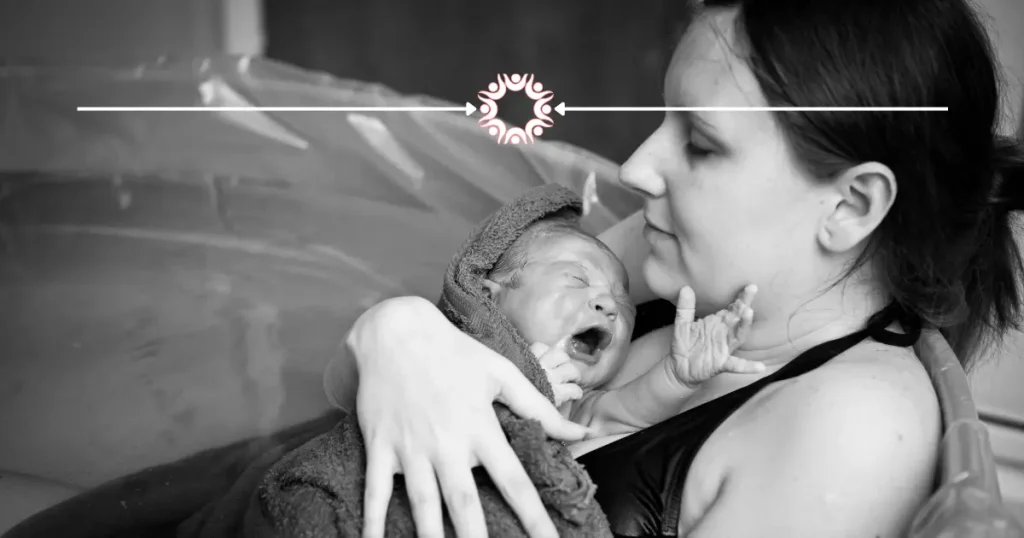
After baby is born, they go directly onto mom’s chest and typically remain there for at least the first hour. Even if baby needs a little extra assistance immediately after birth, we provide that care right next to mom whenever possible.
Families can choose delayed cord clamping for as long as they wish, and the placenta can even be delivered while the cord is still attached.
If mom experiences a first- or second-degree tear, we can repair it at home. More significant tears require hospital care, although severe tears are less common in homebirth settings.
We encourage breastfeeding within the first hour, monitor both mom and baby’s vital signs, complete a thorough newborn assessment, and, because we’ve already discussed informed decision-making throughout pregnancy, I already know your preferences regarding newborn medications.
Of course, everyone enjoys those first baby measurements too!
Postpartum Care: Where Midwifery Really Shines
Postpartum care is where home-based midwifery care really shines, in my opinion.
Instead of loading everyone into the car with a newborn, the midwife comes to you.
Typical postpartum visits include:
- 24 hours
- 72 hours
- 2 weeks
- 4 weeks
- 6 weeks
During these visits we discuss:
- Breastfeeding
- Your recovery and healing
- Baby’s growth and weight
- Any concerns or questions you may have
If breastfeeding challenges arise, we can refer you to an IBCLC (International Board Certified Lactation Consultant), and in some cases, they can even visit your home.
If pelvic floor therapy would be beneficial, we’ll connect you with the appropriate specialist.
We also complete all of the same newborn screenings offered in the hospital, so your baby isn’t missing any important care simply because they were born at home.
Women often report feeling much more supported during the postpartum period with this type of care, and we see lower rates of postpartum mood disorders following home-based care, regardless of where the baby is ultimately born.
The Bottom Line
Certified Professional Midwives provide comprehensive, individualized care throughout pregnancy, birth, and postpartum.
Many families appreciate having access to the same routine testing and screenings while receiving longer appointments, personalized care, and true informed decision-making along the way.
If you’re curious whether homebirth or midwifery care might be a good fit for your family, don’t hesitate to reach out with questions.
To find a licensed midwife in your area, visit this website.